Geography again???
Course documentation
The digital transformation is progressing too slowly in schools? Content is still predominantly taught through books? That's certainly true, because in order to communicate complex facts vividly, there is often a lack of convincing digital solutions.
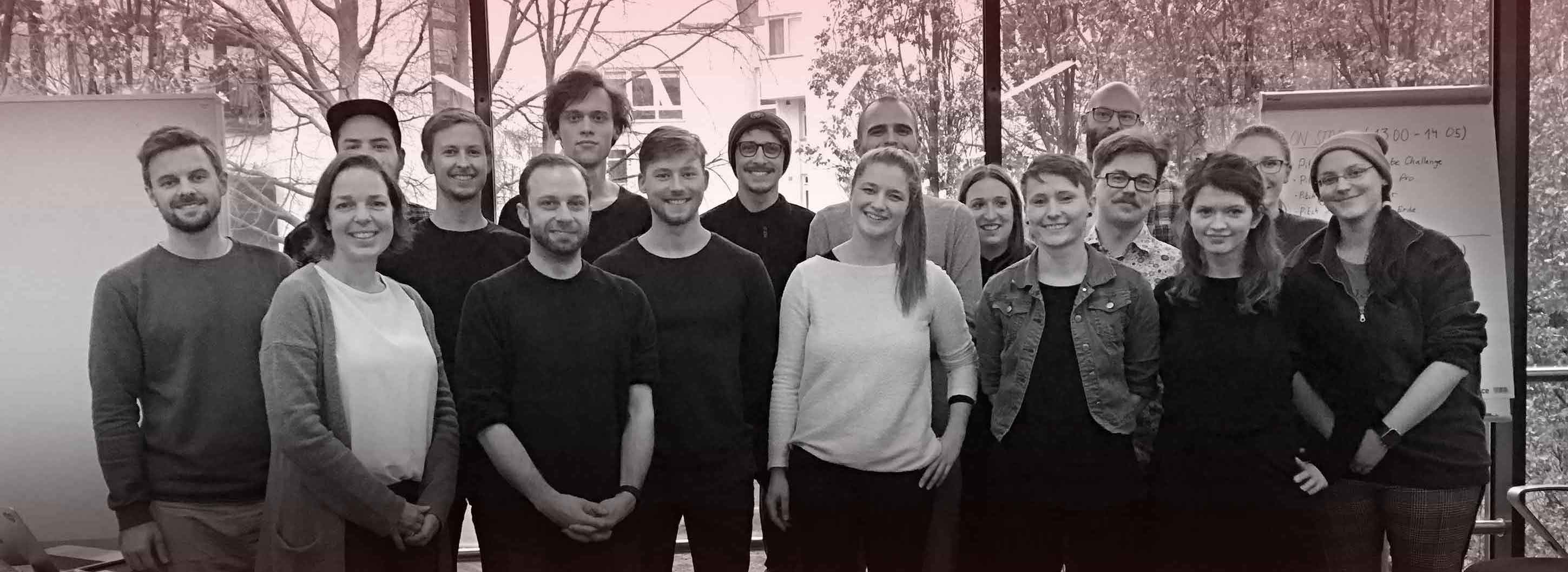
In the course cooperation between the publisher Cornelsen and the University of Applied Sciences Potsdam, we dealt with the topic of climate change and designed apps that allow students inside and outside the school to learn what causes and impacts climate change has – and above all what each individual can do.
Fridays for Future, the resistance against the clearing of the Hambacher Forst and the Instagram Trashtag Challenge are examples that show that the topic is important for young people and that they themselves become active. The results of our course are 5 very different apps that activate and are fun. No more "That's none of my business"!
Research
Within the research process, the course was able to reach the sprint goal in two phases and then switch to developing ideas. Using the »Digital Innovation Playbook« by Dark Horse and the »Design Sprint Book« by Jake Knapp, the course was optimally prepared for the subsequent project objectives.
First, the expert knowledge required for the course on the topics of teaching, learning and climate change was built up and critically questioned with regard to the later intended use, and ambiguities were discussed. The main focus here was on the questions with which both teachers and students feel confronted within and outside the classroom. In addition, the question arose as to which goals the course must have in mind in order to promote students as well as to be able to challenge them.
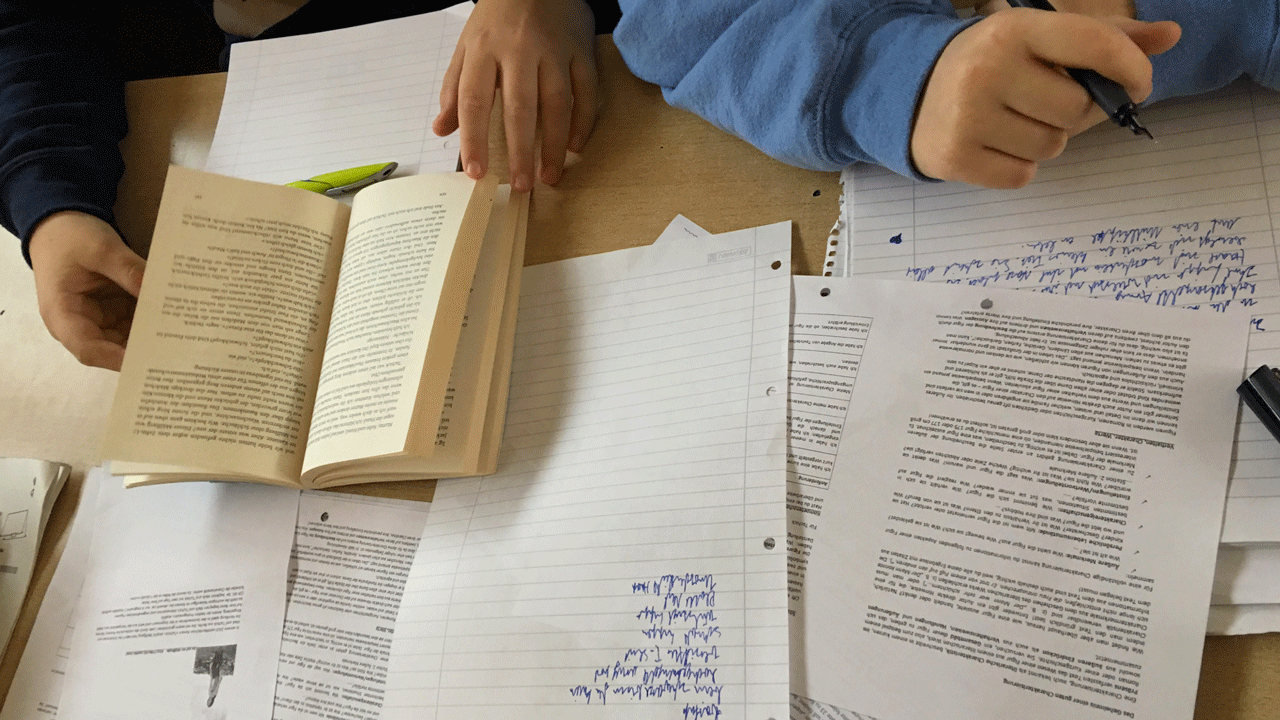
In order to be able to generate valid answers from the questions, hypotheses were first set up and, with the help of meta journeys and customer profiles. An attempt was made to obtain an overall sentiment of the target group. In addition, a uniform definition of »learning success« was defined. In order to evaluate these results, the course had the opportunity to observe several classes at the Voltaire Comprehensive School in Potsdam. The group visited students in physics, maths, german and biology classes. Students were then interviewed individually. The questions were derived from an observation form previously compiled by all course participants.
The results from the class observations and interviews helped to transfer the validated indicators and hypotheses into the development of the course objectives.
Ideation
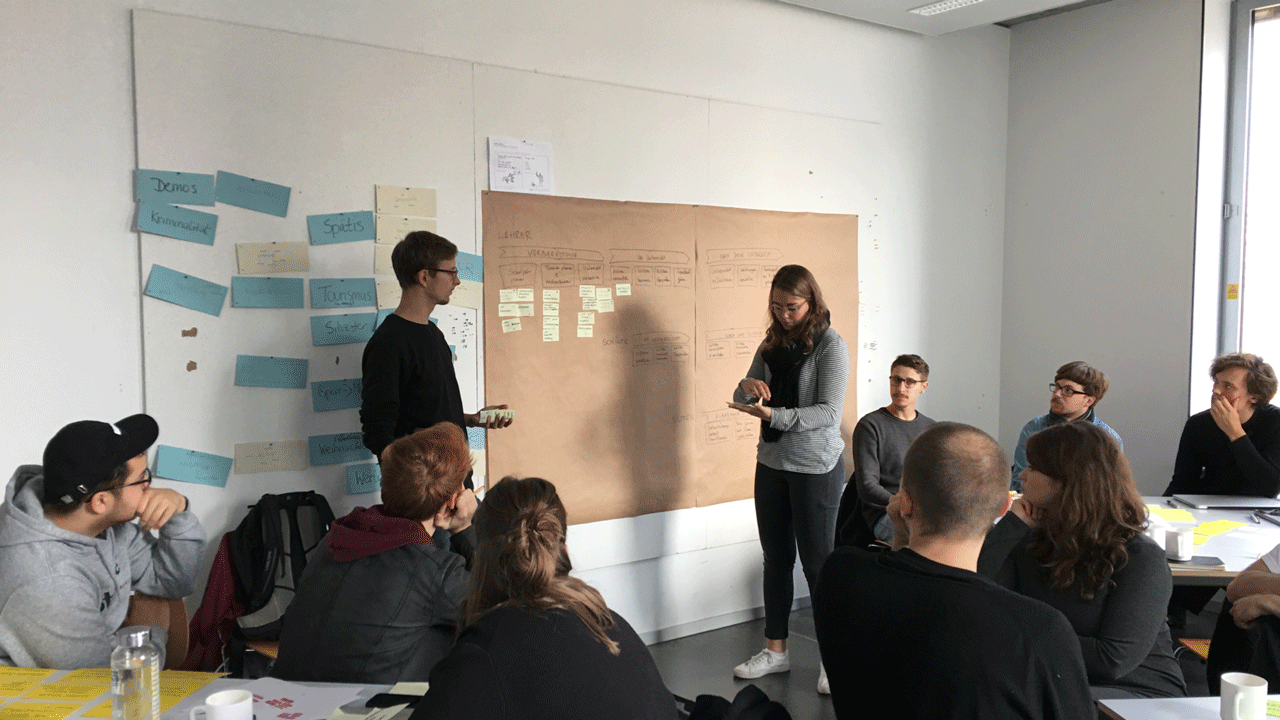
Before the students could start to develop their own concepts for an app, a common ideation phase was incorporated into the seminar. It was important to exchange knowledge and observations in a large group and agree on a common goal for the app. We orientated ourselves in this section on the methods of »Sprint« by Jake Knapp.
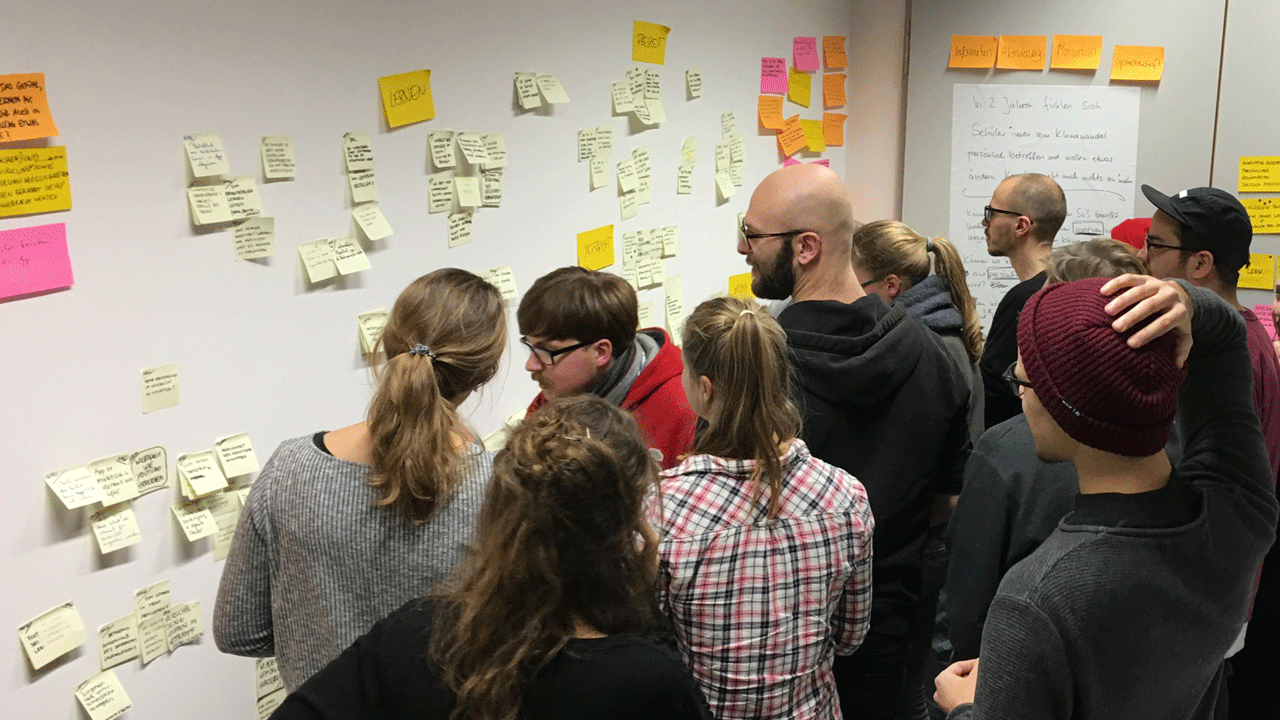
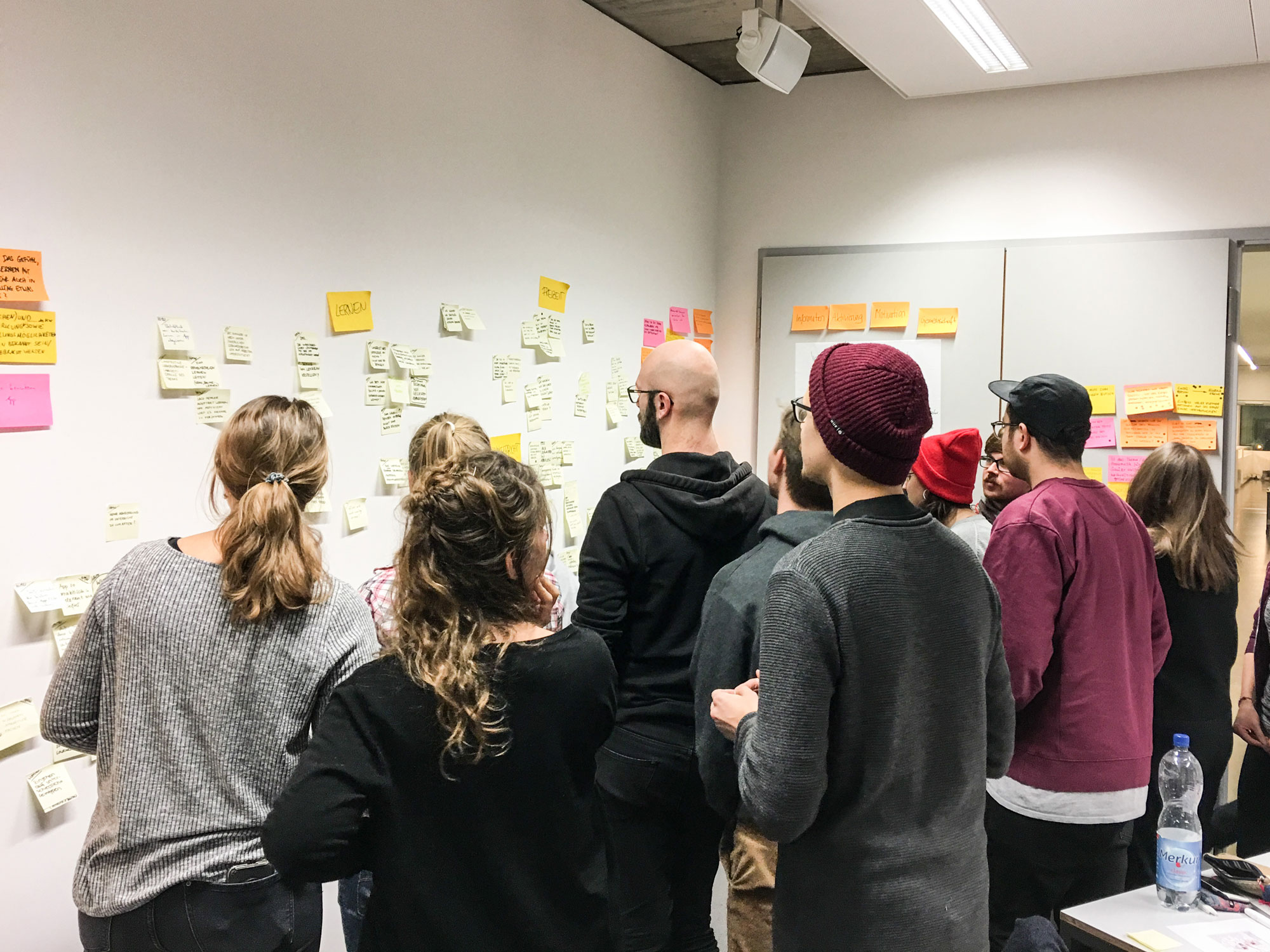
Since digital products are usually planned starting from the end, we first asked ourselves what we would like to achieve in two years with our app. After an anonymous exchange using Post-It notes and a subsequent vote in the big group, our 2-year goal was clear:
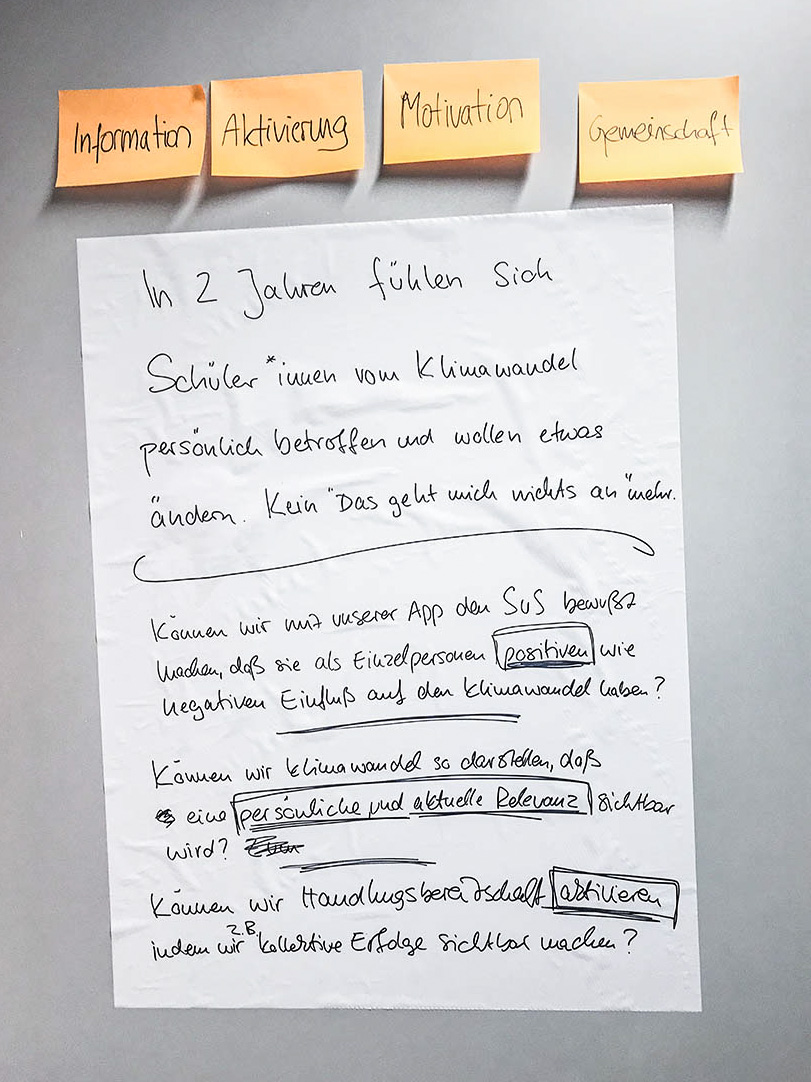
In 2 years, students should feel personally affected by climate change and have the desire and motivation to change something. They should no longer think to themselves, »That's none of my business!«
This goal was made visible to everyone to further brainstorming upon and recorded as a permanent reminder on a poster in our seminar room. It was supplemented in a second step by three aspects, so-called »sprint questions«. These aspects seemed important to us and needed to be met in the pursuit of our 2-year goal.
• Can we use our app to make students aware that as individuals they have a positive or negative impact on climate change?
• Can we present climate change in a way that reveals personal and current relevance?
• Can we activate action by using, for example, the visualization of collective success?
If we were able to answer these three sprint questions with our finished product with a »yes« then we will have achieved our goal.
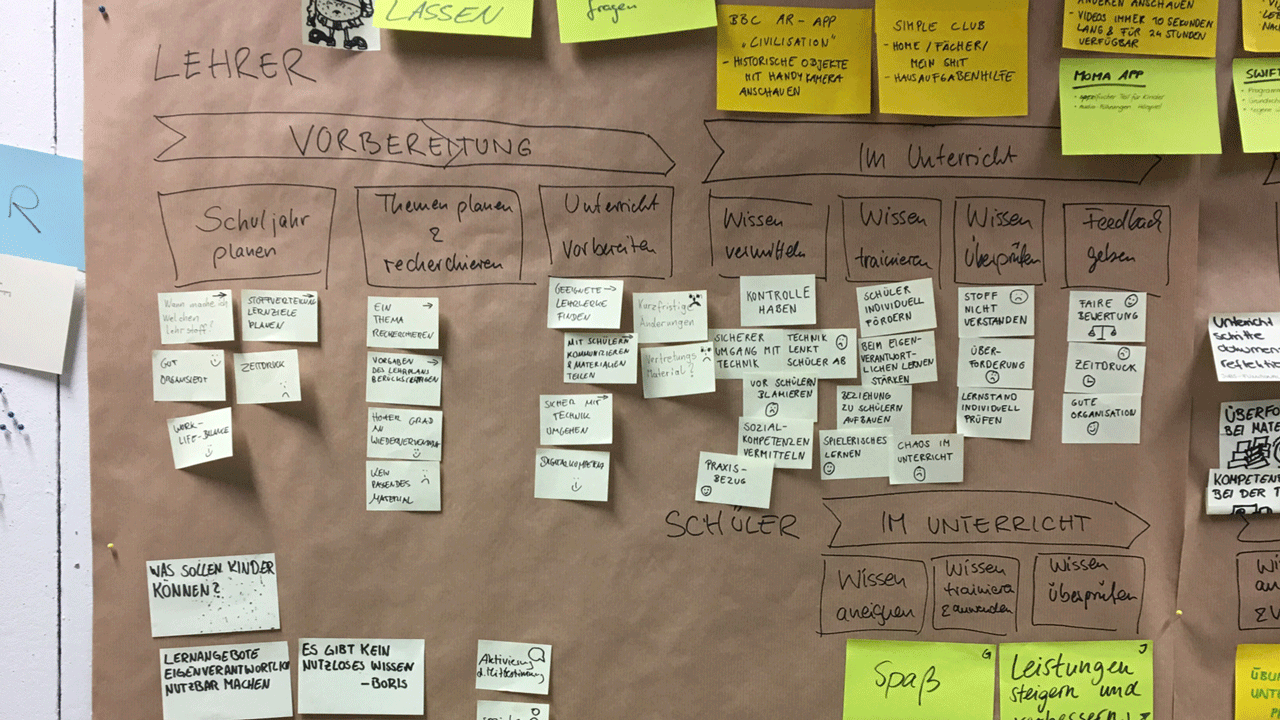
In the wider discussion in the large group, we have noted all emerging ideas, cues, observations, issues, and open questions on Post-Its. These notes followed the pattern of the »how-might-we-question« (HMW-question), a positive, concise phrase that always describes an »opportunity« rather than a »problem«. These Post-Its also found their place, visible to all, on the seminar room wall. After another majority vote, the most important HMW-Questions were located on the user journey of the pupil to show us in which moment the pupils would use the app.
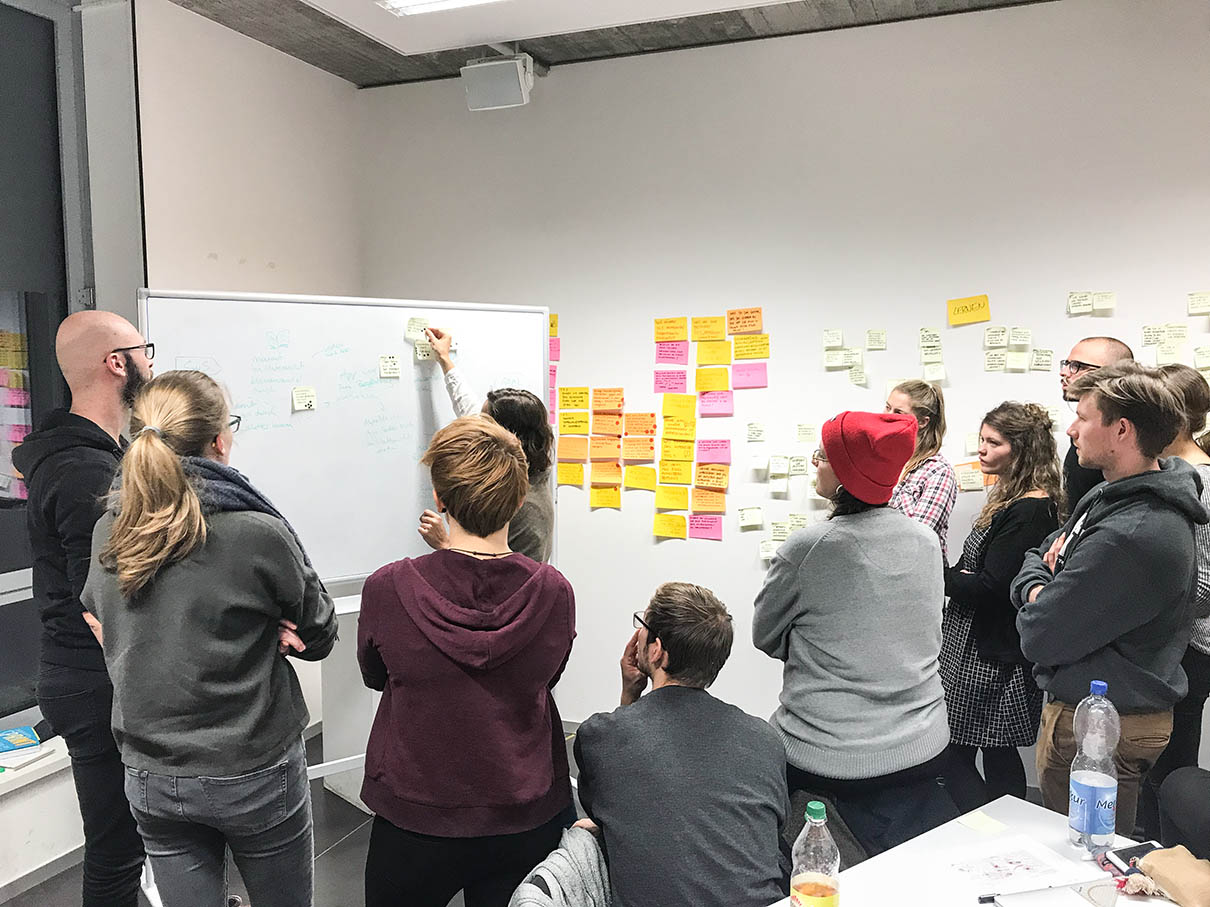
In terms of content, we now had the same prerequisites for all seminar participants and were ready for the concrete concept development.
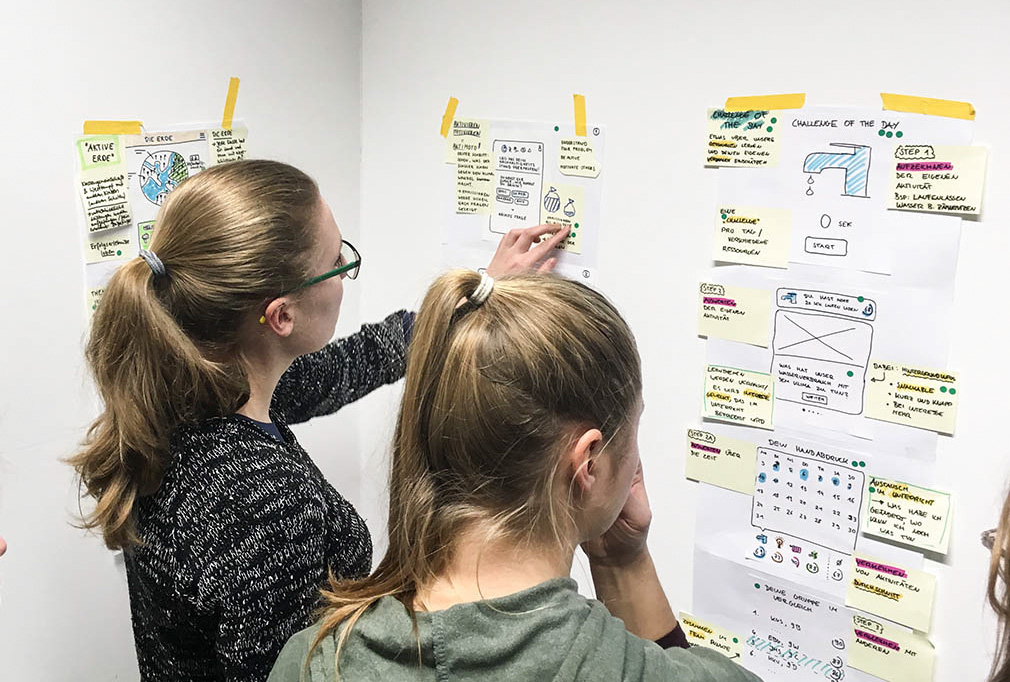
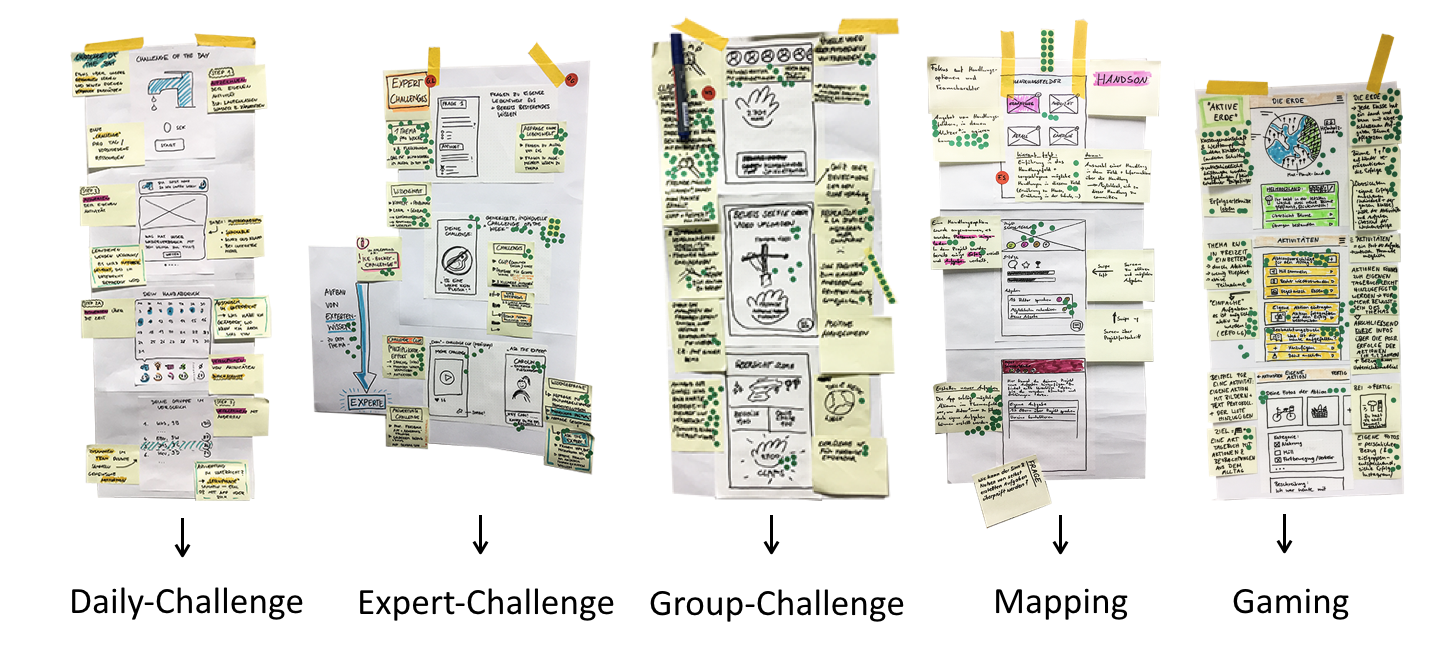
In the second section, in contrast to the previous one, we worked on individual work. First in analog sketches, and later in more concrete 3-screen concepts, individual concepts and ideas were recorded. By clustering these concepts into similarities, the topics, and a division of the seminar participants, resulted for the following group work.
User testing
In order to finally see if the app is understandable to the students or the UX has succeeded, we did a user testing in the Cornelsen publishing company. The preparation for the user testing started for us students weeks before, in a workshop where we learned from Lennart Schorling, a Cornelsen employee how such a user testing runs and what to look for.
Another part was that we formulated hypotheses that are verifiable with the prototype. One hypothesis would be e.g. »The content of the text is understandable.« or »The way how the knowledge is communicated, the user feels is sufficient.«.
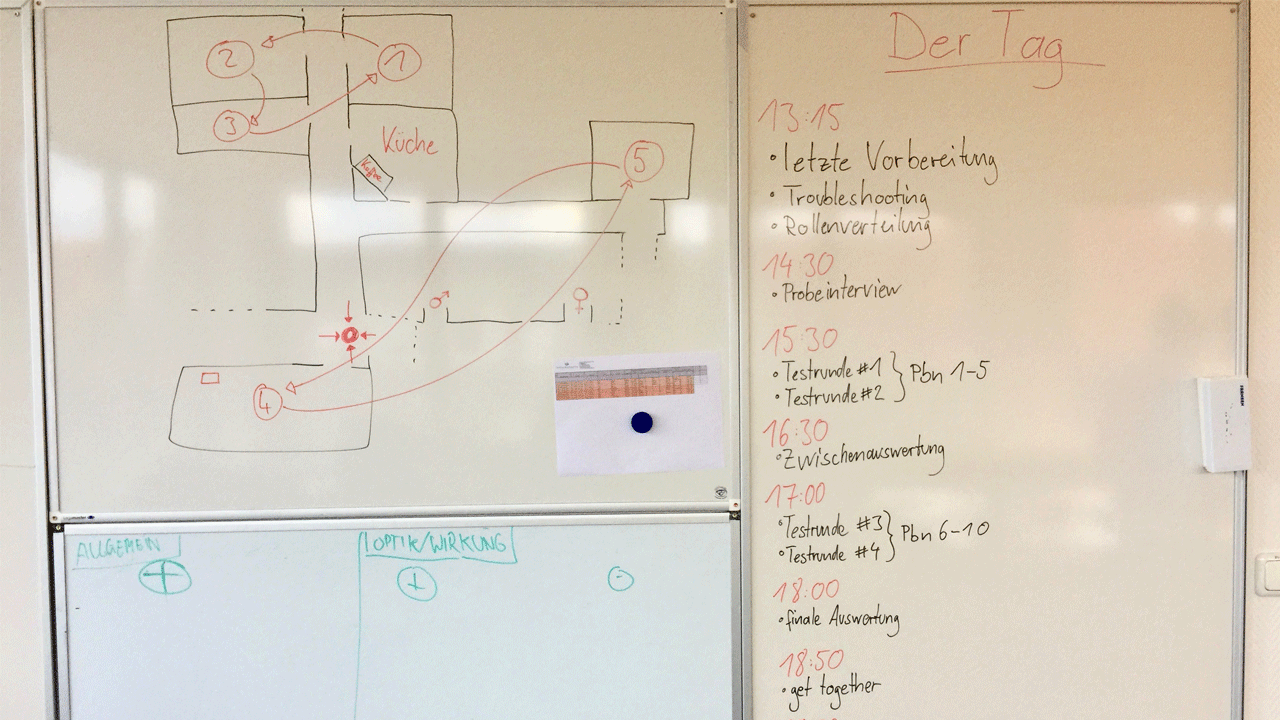
All in all, we felt then very well prepared and were ready for the user test. The day of the user test started at 1 pm and looked like that, we prepared each group for itself in his interview room. Questions were clarified, like how and where sits the User and where the interviewer? Are there enough pieces of paper and are there enough cookies to feed the User? Who is the interviewer and who are the writers?
After that we went through a test run with the prototype and showed it to a Cornelsen employee. The test run was helpful, which allowed us to correct even small flaws in the process, in the prototype or even errors in the communication.
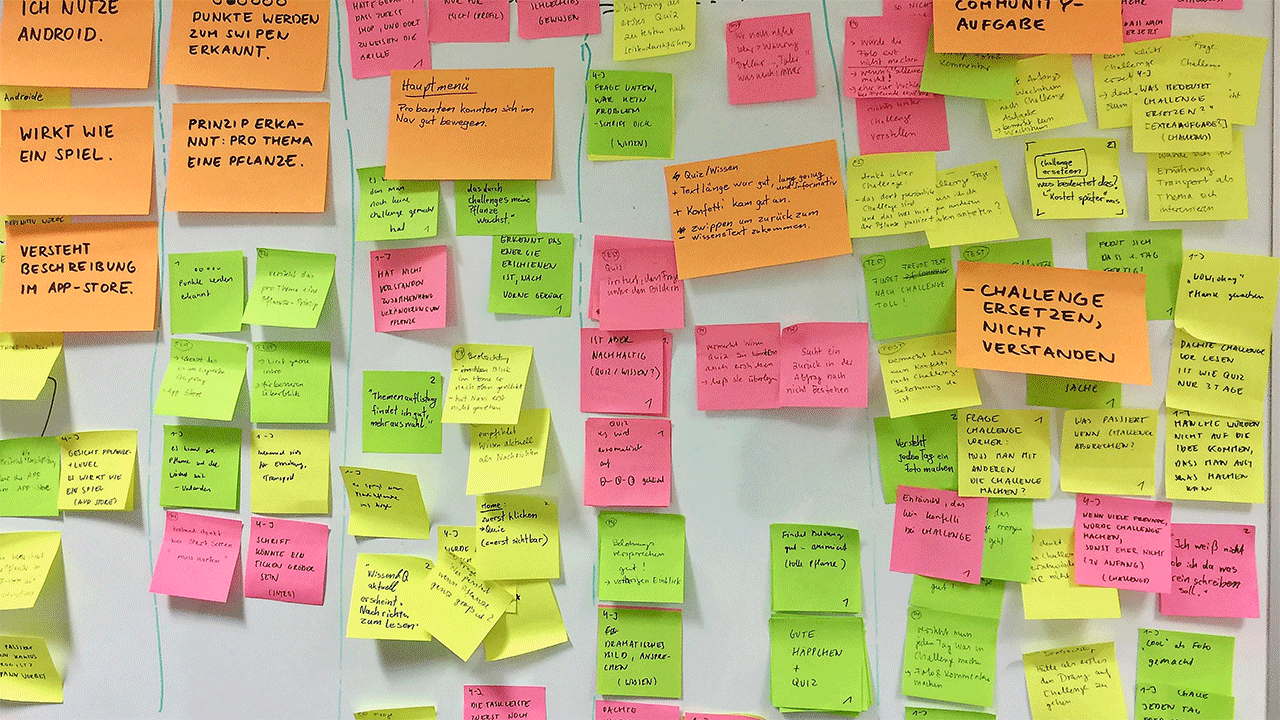
At 03:30 PM it was finally time. Quickly it was rumored in the corridor that the first Users had arrived. The excitement was visible to everyone. In general, each group expected four students from 9th to 10th grade for user testing. During our interview, we recorded our observations on Post-Its. Positive as well as negative statements, new ideas and quotes of the subject were recorded. In addition, during the interview, attention was paid to whether our hypotheses were confirmed. After user testing, we evaluated and clustered the results.

Projects
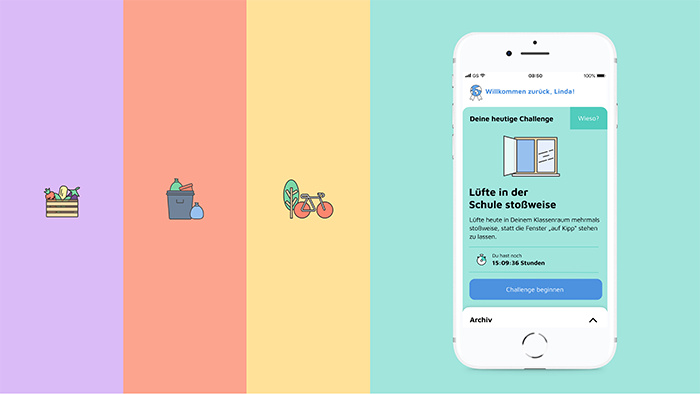
Climate Challenge
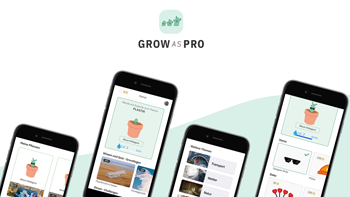
Grow as Pro
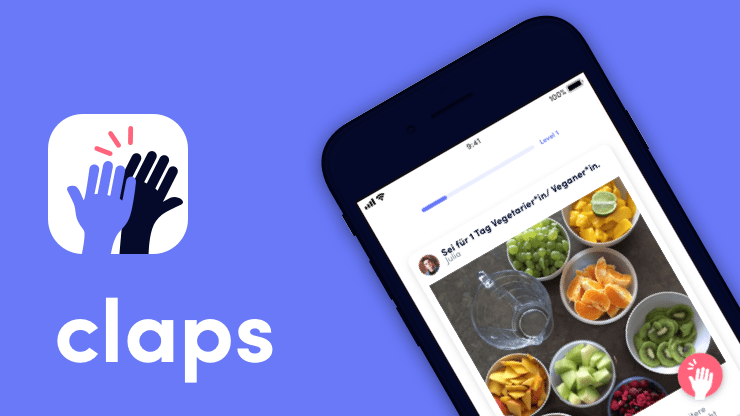
Claps
Climapper
Mission: Erde